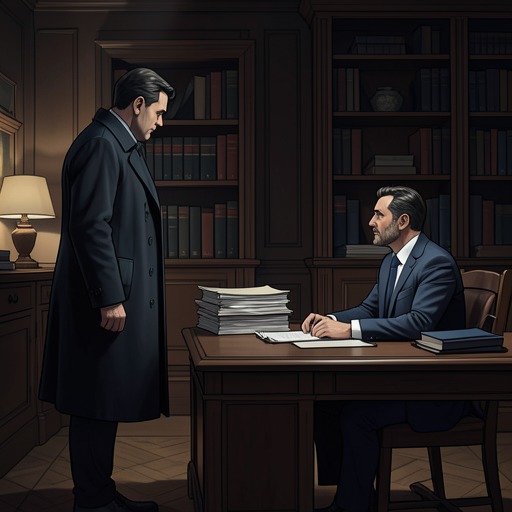
Balfour Shipping
The LuminariesBalfour Shipping is the Hokitika shipping agency founded and operated by Thomas Balfour after he moved his business from Otago to the West Coast. Its vessels and commercial records connect distant ports to the novel’s local mysteries: most consequentially, the firm transports Alistair Lauderback’s crate, which disappears from the waterfront and later turns up aboard the Godspeed. The agency is not itself shown as the author of the deception, but its ordinary work of receiving, storing, and forwarding cargo becomes an essential part of the chain of events that exposes it.
Origins and Move to Hokitika
Before the West Coast gold rush, Balfour conducted business in Dunedin from a small shingle-roofed harbour-front building beneath a banner bearing the name Balfour & Harnett, Shipping Agents. The firm’s position beside the central wharf helped attract prominent clients, including Lauderback. In January 1865, Robert Harnett retired, sold his share to Balfour, and moved north. Balfour promptly gave up the Dunedin premises, judging that Otago’s boom had passed, and travelled to the Coast to establish a new operation.
He bought a bare plot near the mouth of the Hokitika River, pitched a tent, and began building a warehouse. The partnership name gave way to Balfour Shipping as the company took root in the rising town. The move places the firm at a practical intersection of the gold-rush economy: it receives goods sent across the region, stores them, and arranges onward carriage. Its growth is therefore tied not only to Balfour’s business decisions but to the rapid development of Hokitika as a port and commercial centre.
Vessels, Clients, and Business Relationships
Balfour’s earlier dealings with Lauderback established a durable commercial connection. When Lauderback offered him the clipper Virtue, Balfour judged that vessel suitable for a monthly route between Port Chalmers and Port Phillip, unlike the smaller Godspeed, which did not meet his requirements. He agreed to find a master, insure the Virtue at a fair premium, and lease it for a year. The ship subsequently ran between Dunedin and Melbourne for two years, while the carefully arranged insurance clause went unused.
The Virtue later became central to the firm’s Hokitika operations. In January, Lauderback sent his personal effects by sea from Lyttelton to Port Chalmers, where Balfour arranged for the Virtue to carry them onward to the Coast. Balfour Shipping had also held Lauderback’s private account since the winter of 1861, making the agency a longstanding intermediary rather than a chance carrier hired for one isolated delivery. When the Godspeed reached Hokitika some months earlier, Balfour recognized Lauderback’s ship and introduced himself to its master, Francis Carver. Their relationship remained outwardly cordial through their shared business connection, although Balfour privately considered Carver thuggish and suspected him of being a crook.
The firm also held a contract connected to Joseph Pritchard’s drug shipments. When Ah Sook came seeking information after Anna Wetherell’s collapse, Balfour was distracted by the discovery that Lauderback’s crate had vanished. He explained that Balfour Shipping had Pritchard’s contract but directed Ah Sook to the supplier, Carver, for questions about the cargo itself. That distinction matters: Balfour could identify a commercial link and point toward its supplier without claiming direct knowledge of the contents or the relationship between the two men.
The Missing Crate and Its Journey
The Virtue arrived at Hokitika on 12 January, two days before Lauderback himself. The next day, the crate was unloaded with the rest of the cargo and, according to the shipping arrangements, was to be transferred to Balfour Shipping’s warehouse for collection after Lauderback arrived. It never reached the warehouse. Balfour searched for it without discovering where it had gone.
The missing shipment had greater significance than its appearance suggested. Lauderback’s trunk contained papers, including a copy of the contract under which the Godspeed had been sold. Another account of the crate’s contents identifies a trunk holding five dresses with approximately four thousand pounds in gold sewn into their linings. Carver had sought to recover that fortune and had advertised in the West Coast Times under the name Crosbie Francis Wells. The crate thus carried material evidence as well as concealed wealth, while its uncertain custody left both vulnerable to misidentification and theft.
Two weeks after its disappearance, the crate was found among the cargo cleared from the wrecked Godspeed. Balfour’s later account traces its arrival there: men on the waterfront opened a crate, found a trunk and carpetbags, and, unable to locate Carver, put it aboard the ship before its early departure. Once at sea, Carver examined the bill of lading and recognized that the men had taken the wrong shipment. The crate was associated with Balfour Shipping, whereas the one he had lost was identified with Danforth Shipping. The episode turns the agency’s paperwork into a decisive clue: the shipping mark and bill distinguish the crate the crew loaded from the one Carver was seeking.
Records, Risk, and Narrative Significance
Balfour Shipping’s importance extends beyond carrying cargo. Its office became one of the places where Aubert Gascoigne pursued information about Lauderback’s protection-and-indemnity cover. Gascoigne’s inquiries, which also took him to newspaper archives, the Harbourmaster’s office, and the Reserve Bank, established that Lauderback belonged to the Garrity Group and that each of his ships had nearly a thousand pounds in credit. This information allowed Carver, as the Godspeed’s later owner, to seek funds toward wreck removal within the applicable period. Balfour Shipping is presented as a source consulted in that investigation, not as the insurer or the party deciding the claim.
The agency’s role is also shaped by the way its history reaches the reader. Balfour recounts events in a digressive, interrupted fashion; Walter Moody must rearrange the fragments into a chronology and relate the people and objects gathered around the missing crate. In that reconstruction, Balfour Shipping appears as a working link among Lauderback’s political and maritime affairs, Carver’s fraud, the transport of valuable goods, and the search for evidence. The firm’s routines—contracts, manifests, warehousing, and delivery—do not prevent the crate from disappearing. Instead, those routines leave behind the particulars by which the confusion can eventually be understood.